Canva's CTO Just Described the End of Writing Code. This is UX Design's Time to Shine.
When senior engineers become reviewers instead of writers, the bottleneck shifts from code generation to verification.

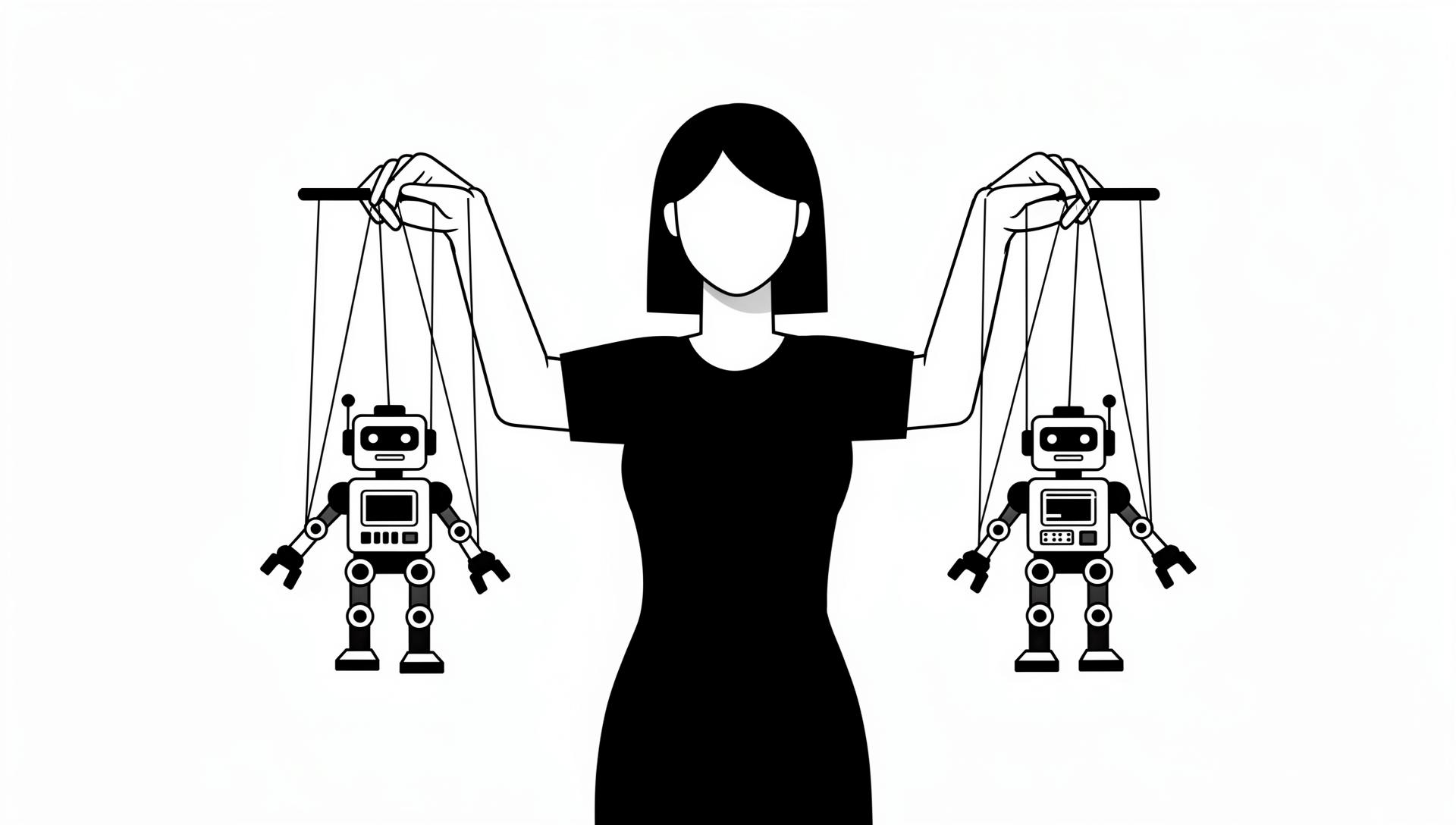
Canva's CTO just described a workflow where senior engineers aren't writing code. They're reviewing and steering AI agents overnight. That changes what "good UX" means inside product teams. It's no longer just interfaces for humans. It's interfaces for intent, verification, and trust.
The Shift
Canva's CTO, Brendan Humphreys, says engineering teams now draft instructions for AI agents to execute overnight, and that senior engineers' jobs have become "largely review." If that's true (and it matches what I'm seeing across the industry), the bottleneck isn't code generation anymore. It's verification.
That's not an engineering problem. It's a UX problem, specifically the UX of work: how people specify, supervise, audit, and ship work they didn't directly produce.
From Maker to Reviewer
Humphreys' framing is blunt: engineers still do the hard part (turning ambiguous requirements into specs), but then agents do the drafting and humans do the steering and review across Canva's approximately 70 million lines of code. That means:
- The "unit of work" becomes an instruction + constraints, not a commit.
- The artifact you need to understand becomes a diff + rationale + provenance, not just code.
- The failure mode shifts from "I wrote a bug" to "I approved a bug I didn't fully understand."
That last one is where teams get hurt.
Verification Debt Is Real (And Quantifiable)
Sonar's 2026 State of Code developer survey (1,100+ developers globally) puts numbers on the trust gap:
- 96% of developers don't fully trust AI-generated code is functionally correct
- Only 48% say they always verify AI-assisted code before committing
- 38% say reviewing AI-generated code requires more effort than reviewing human-written code
- AI now accounts for 42% of all committed code, expected to reach 65% by 2027
- 64% of developers have started using autonomous AI agents
- Developer "toil work" remains steady at 24% of the work week regardless of AI usage
The Verification Gap
Sonar 2026 State of Code · 1,100+ developers surveyed
That gap between distrust and verification is what AWS CTO Werner Vogels calls "verification debt." You can ship faster for a while, until you can't.
If Canva is pushing agent-driven execution at scale, the competitive advantage won't just be "we have agents." Everyone will. The advantage will be: we can verify at scale without burning out our seniors.
What "AI Agent UX" Actually Looks Like (5 Concrete Product Ideas)
If I were designing internal tooling and workflows for this world, I'd prioritize:
1. Intent Capture That's Structured, Not Vibes
Prompt-as-spec is brittle. People need scaffolds: constraints, acceptance criteria, "must-not-change" zones, risk flags. The input UX for an overnight agent run should look more like a structured brief than a chat prompt. Think: checklists, boundary conditions, blast-radius warnings.
2. Provenance-First Diffs
Not just "what changed," but: which instruction caused it, what context was used, what files were touched historically, what tests were run, what uncertainty remains. When an engineer reviews a 47-file diff at 8am, they need to understand why each change exists, not just what changed.
3. Review Tuned to Risk
Every change doesn't deserve equal scrutiny. The UX should triage: surface high-blast-radius changes, security-sensitive modules, duplicated logic, unexplained complexity. Sonar's survey found AI-generated code that "looks correct but isn't reliable" is flagged by 53% of developers as a negative impact. The review interface needs to make risk visible.
4. Feedback Loops That Teach the Agent (and the Team)
Review comments shouldn't vanish into the void. They should become reusable patterns: "When touching module X, always check Y." Over time, this creates institutional knowledge that makes the agents better and makes review faster. It's the compound interest of good UX.
5. A Human-Centered Throttle
When the agent can produce infinite output, humans become the scarce resource. The UX should defend focus: limit concurrent diffs, batch related changes, kill noisy agents. Sonar found that toil work stays at 24% of the week regardless of AI usage. The time saved in writing is being reinvested in reviewing. Good UX ensures that investment pays off instead of creating fatigue.
Why This Matters to Canva Specifically
Canva has over 220 million monthly active users and approximately 70 million lines of code. At that scale, tiny failure rates become real incidents. An agent that introduces a subtle regression in the template rendering pipeline doesn't just affect one team. It affects millions of designs.
If agents increase throughput, then verification UX becomes a reliability feature. The company that builds the best review experience, not just the best agents, wins.
This isn't theoretical. Spotify's CEO reported their most senior developers haven't written a single line of code since December, instead supervising an internal AI system. The pattern is industry-wide. The question is who designs the best human layer on top of it.